Evolution of Marathi Ukhane Over Time (From Tradition to Modern Expression)
Marathi Ukhane are more than just poetic lines—they are a living tradition that reflects the culture, emotions, and creativity of Maharashtra. From weddings to festivals, Ukhane have always held a special place in social gatherings. But have you ever wondered how this tradition started and how it has changed over time?
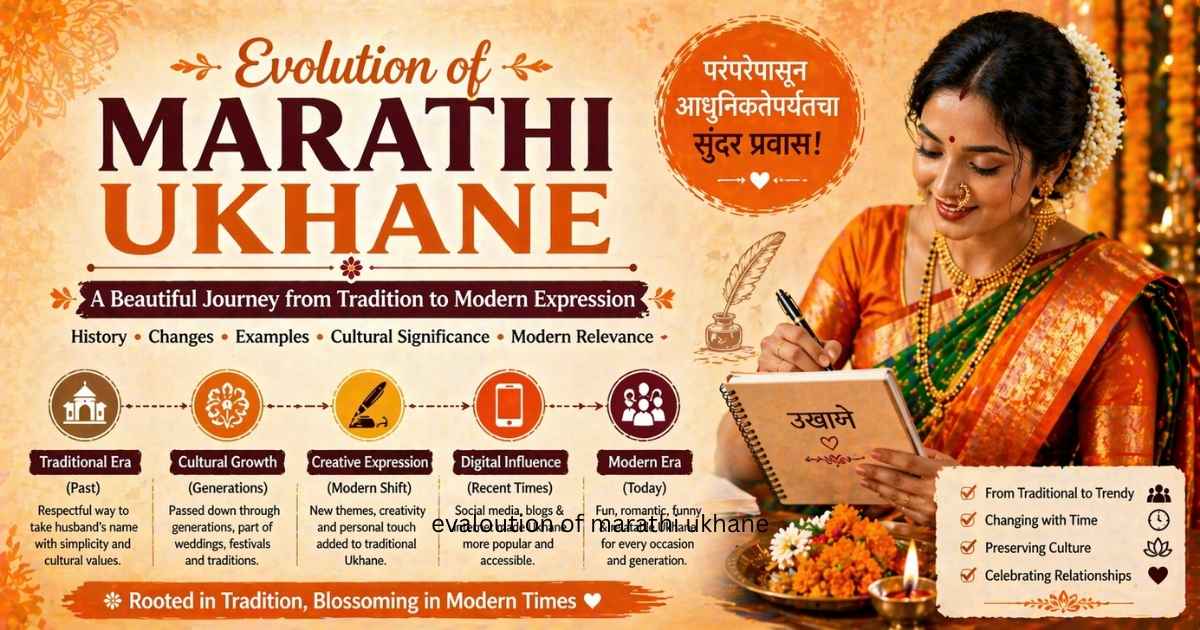
The evolution of Marathi Ukhane over time is a fascinating journey. What began as a respectful way for women to take their husband’s name has now transformed into a creative, fun, and widely shared cultural practice. Today, Ukhane are not only traditional but also modern, humorous, and even influenced by social media trends.
In this article, we will explore how Marathi Ukhane have evolved—from their origins in traditional society to their modern-day adaptations. You will also understand their cultural importance, changing styles, and how they continue to stay relevant in today’s fast-paced world.
📜 Traditional Origins of Marathi Ukhane
The roots of Marathi Ukhane go back to a time when social customs were more formal and structured. In traditional Maharashtrian society, married women were expected to show respect towards their husbands by not taking their names directly in public. This practice was seen as a sign of modesty and cultural values.
To overcome this restriction, women started using poetic expressions—what we now call Ukhane. These were short, meaningful lines where the husband’s name was cleverly included within a rhyme or metaphor. This allowed women to follow social norms while also expressing their identity in a creative way.
✨ Features of Traditional Ukhane
Traditional Ukhane were simple but deeply meaningful. They often included:
- Nature references (flowers, moon, rivers)
- Religious elements (gods, rituals, prayers)
- Cultural symbols (festivals, traditions)
- Emotional expressions (love, respect, devotion)
👉 Example:
“वडाच्या झाडाला घालते फेरे सात,
_____ रावांसोबत राहो जन्मोजन्मी साथ.”
These Ukhane were commonly used during:
- Weddings
- Haldi-Kunku ceremonies
- Festivals like Vat Purnima
They were passed orally from one generation to another, making them an important part of Marathi cultural heritage.
👥 Role of Society in Shaping Ukhane
In earlier times, society played a big role in shaping how Ukhane were used. They were not just personal expressions but also a reflection of cultural discipline and respect. Women were expected to say Ukhane gracefully, with proper tone and modesty.
Over time, this practice became a form of social bonding. Women gathered during festivals and shared Ukhane, often adding humor and creativity. This laid the foundation for the evolution of Ukhane into a more flexible and expressive tradition.
🚀 Modern Transformation of Marathi Ukhane
As society changed, so did the style and purpose of Ukhane. The modern generation brought new ideas, creativity, and freedom into this tradition.
Today, Ukhane are no longer limited by strict rules. Both men and women actively participate, and the tone has become more relaxed and fun.
💬 Changes in Style and Language
Modern Ukhane are:
- Shorter and more direct
- Mixed with English words
- Inspired by daily life and technology
- More humorous and expressive
👉 Example:
“मोबाईल, इंटरनेट आणि WhatsApp चा जमाना,
_____ राव आहेत माझे नंबर वन दीवाना.”
This shows how modern life has influenced traditional expression.
📱 Influence of Media and Internet
The rise of the internet and social media has played a major role in the evolution of Marathi Ukhane.
- Blogs and websites share hundreds of Ukhane
- WhatsApp and Instagram spread new trends
- People search for “modern Ukhane,” “funny Ukhane,” etc.
👉 Result: Faster spread of ideas, more creativity, easy access for everyone
🎭 Cultural Importance in Modern Times
Even though styles have changed, the core meaning of Ukhane remains the same:
- Expressing love and respect
- Celebrating relationships
- Preserving Marathi culture
Today, Ukhane are a mix of tradition and modern creativity. They allow people to connect with their roots while enjoying contemporary expression.
💡 Tips to Keep the Tradition Alive in Modern Times
As Ukhane continue to evolve, it is important to maintain a balance between tradition and modernity.
- 1. Respect the Cultural Roots: Even when creating modern Ukhane, keep the essence of respect and emotion intact.
- 2. Encourage Creativity: Let younger generations experiment with new styles, themes, and humor.
- 3. Use Digital Platforms Wisely: Share Ukhane online, but focus on quality and originality.
- 4. Learn Traditional Ukhane: Understanding traditional forms helps you create better modern versions.
- 5. Keep It Relevant: Match your Ukhane with the occasion—traditional for rituals, fun for casual events.
❓ FAQs
💫 Conclusion
The evolution of Marathi Ukhane over time is a perfect example of how traditions can adapt without losing their essence. From their origins in a respectful and structured society to their modern, creative forms, Ukhane have come a long way.
Today, they are not just a cultural practice but also a form of expression, entertainment, and connection. They bring people together, create joyful moments, and keep Marathi culture alive in a changing world.
As we move forward, it is important to preserve the roots of this tradition while embracing new ideas. Whether traditional or modern, Ukhane will continue to hold a special place in Marathi culture for generations to come.
💬 जर तुम्हाला हा लेख आवडला असेल तर नक्की शेअर करा आणि मराठी परंपरा जिवंत ठेवा! ❤️✨
Similar Posts
How to Memorize Marathi Ukhane Easily (Simple & Effective Guide)
Many beginners feel nervous and often forget the lines at the last moment. This is very common, especially during weddings or festivals like Haldi-Kunku and Vat Purnima, where everyone is watching and expecting you to perform well. The good news is that memorizing Marathi Ukhane is not difficult if you follow the right techniques. With…
History of Marathi Ukhane Tradition
If you have ever attended a Marathi wedding or a traditional festival in Maharashtra, you might have heard something unique and charming—Marathi Ukhane. These are short poetic lines where a person takes their spouse’s name in a creative and respectful way. While it may sound simple, the tradition of Marathi Ukhane carries deep cultural roots…
What is Marathi Ukhane? Meaning & Simple Guide
Marathi Ukhane is a beautiful and traditional part of Maharashtrian culture that reflects respect, love, creativity, and tradition all at the same time. If you have ever attended a Maharashtrian wedding or cultural ceremony, you might have heard a bride or groom taking a poetic sentence and filling in their spouse’s name in a unique…
Future of Marathi Ukhane Tradition
Traditions are living stories that travel from one generation to the next. Some fade away with time, while others evolve and become even more meaningful. One such beautiful tradition in Maharashtrian culture is Marathi Ukhane — short poetic lines used by brides and grooms to lovingly mention their spouse’s name during weddings and special occasions….
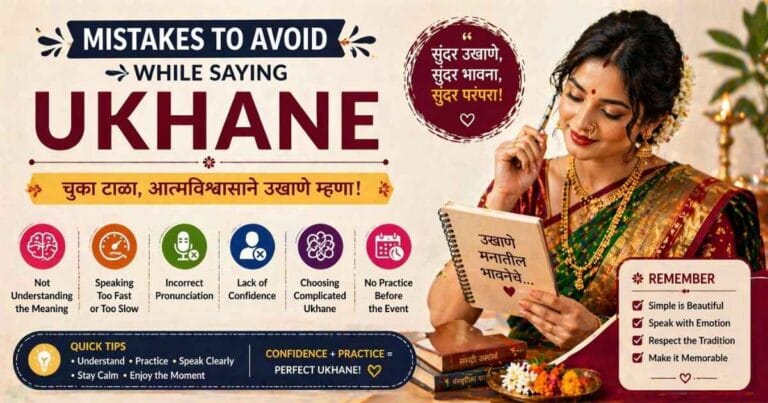
Mistakes to Avoid While Saying Ukhane (Complete Guide 2026 )
Marathi Ukhane are a beautiful blend of culture, emotion, and creativity. Whether it’s a wedding, Haldi-Kunku function, or a festival like Vat Purnima, saying an Ukhane is a special moment. It is not just about taking your spouse’s name—it’s about expressing it in a poetic and respectful way. However, many people—especially beginners—make small mistakes while…